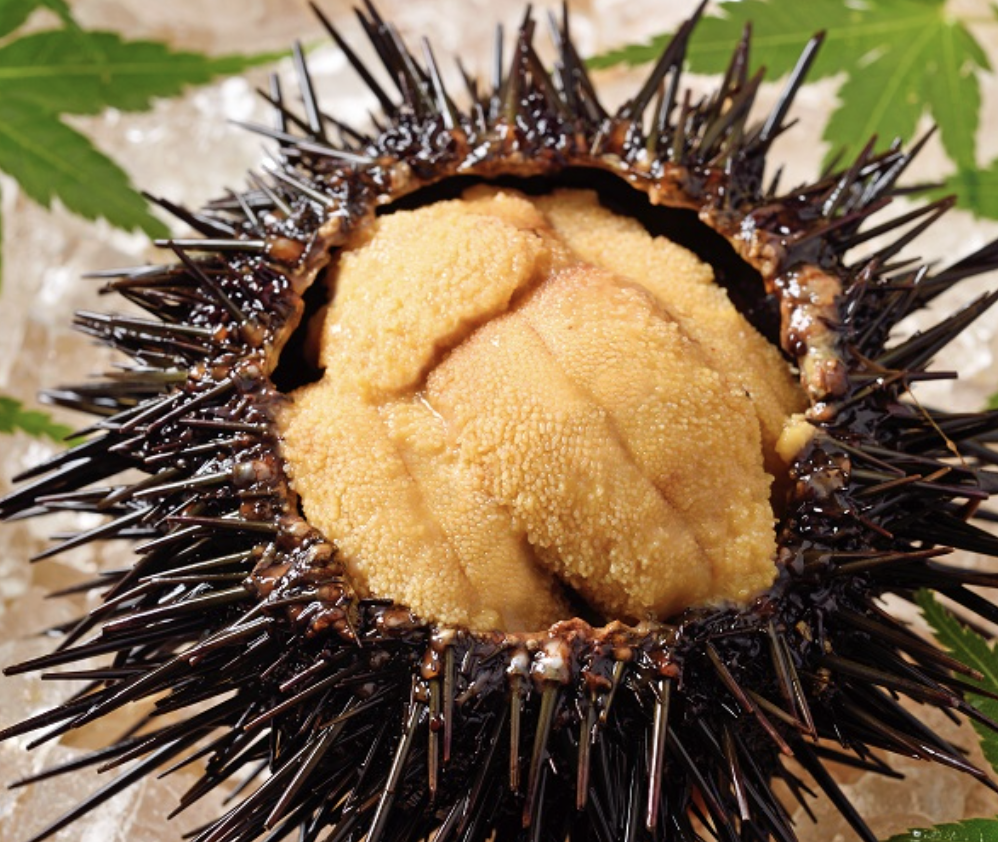
Uni and Purines — Best taste with a catch
Rich, creamy, and meltingly delicious, uni (sea urchin) is a highlight of sushi and seafood bowls across Japan. For those with gout, though, it’s one of those foods that raises the question: “Is this safe for me to eat?”
Although uni looks like fish roe, it’s actually not. The edible part is the gonads of the sea urchin — the organ that produces eggs or sperm. In other words, what we eat is mostly that. How they live with that anatomy is a mystery best left for marine biologists.
Even though it isn’t technically fish eggs, uni still contains a moderate to high amount of purines — about 137 mg per 100 g. That puts it in the “be cautious” category for gout sufferers. Eating it occasionally is fine, but making it a daily habit could trigger a flare-up. Then again, eating uni every day would probably hurt your wallet before your joints.
For reference:
- Uni bowl (donburi): about 80–100 g
- Uni sushi (gunkan): about 10 g
- Full tray (uni box): about 250–300 g → roughly 400 mg of purines total
If you’re managing your uric acid levels well, having two or three pieces of uni sushi once in a while should be fine. Just be careful when pairing it with beer or sake — alcohol slows uric acid excretion. Think of uni as a special treat, not a routine indulgence.
There are several types of uni — bafun, murasaki, aka — each with different seasons. The best approach? Enjoy it fresh, in season, and preferably with a pinch of salt instead of soy sauce. If the sushi chef serves it that way, you’ve found a great spot.
Uni: 137 mg of purines per 100 g (roughly 10 g per sushi piece)